
Quick Summary: How much does a website cost in the UK? A DIY builder costs £10 to £40 a month, a freelancer charges £500 to £3,000, and a UK agency charges £3,000 to £10,000 or more. A professional five-page small business site usually lands between £1,200 and £5,000, depending on who builds it.
| Route | Build cost | Monthly running cost | Timeline | Best for |
|---|---|---|---|---|
| DIY website builder | £0 | £10–£40 | A few days | Testing an idea |
| Freelance web designer | £500–£3,000 | £20–£60 | 2–6 weeks | Tight budgets with time to vet |
| UK agency | £3,000–£10,000+ | £50–£150 | 4–12 weeks | Businesses that want local meetings |
| Overseas agency (Eastern Europe) | £1,200–£3,000 | £30–£100 | 3–8 weeks | Agency quality on a smaller budget |
London agencies sit at the top of these ranges. Regional agencies sit lower. Anything quoted under £500 for a “professional” site usually cuts corners on speed, mobile design or SEO.
The Four Ways to Get a Website Built
How much it costs to build a website in the UK depends mostly on who builds it. There are four routes, and each one trades money against time, quality and risk.
Independent research from Whito, based on early 2026 UK freelancer, agency and platform pricing, puts a typical UK-built small business website at £3,000 to £6,000. It also found that hidden costs such as copywriting usually add 30% to 50% to the quoted price, so ask for a full breakdown before you sign.
DIY builders (£0–£40 a month). Wix, Squarespace and similar platforms let you build the site yourself from templates. A paid plan with your own domain costs £120 to £480 a year. You get a working site without coding, but you are limited by the template, SEO controls are basic, and you will spend 20 to 40 hours building it. This suits sole traders testing an idea, not businesses that need leads.
Freelancers (£500–£3,000). A competent freelancer builds a simple five-page WordPress site for £500 to £1,500, and a site with booking or a shop for £1,500 to £3,000. The risk is dependence on one person. If they get busy or disappear, your project stalls and support after launch often goes with them. Read our guide on how to choose a web designer before you hire one.
UK agencies (£3,000–£10,000+). You get a team of designer, developer and project manager, with structured timelines and support. A standard five-page site costs £3,000 to £6,000, and custom functionality pushes it past £10,000. It is the safest option and the most expensive one.
Overseas agencies (£1,200–£3,000). Agencies in Eastern Europe and the Balkans offer the same team structure at lower prices because their running costs are lower. Communication happens in English over video calls and email, and most sit one or two hours ahead of the UK. We are one of these agencies, so the next section shows our own numbers rather than an estimate. If you are unsure about the model, our guide to outsourcing web design overseas covers the risks and how to avoid them.
What We Charge at BOS.al (and What You Get)
BOS.al is a web design agency in Tirana, Albania. These are our current UK prices, published so you can compare them with other quotes:
| Package | Price | What is included |
|---|---|---|
| Starter | From £1,200 | 5 pages, SEO basics, GDPR compliance, mobile responsive design, 3 months of support |
| Growth | From £1,750 | 10 pages, blog, CMS, local SEO |
| Pro | From £2,200 | Ecommerce, advanced SEO, custom animations and performance work |
A typical project takes four weeks. Week one is discovery and keyword research, week two is design with two rounds of revisions, week three is development, and week four is testing and launch. Full package details are on our web design for small business UK page.
What This Looks Like for UK Clients
These are UK small businesses we have built websites for:
- Leeds accountant: a fast, SEO-ready site built for local search. It reached the top three for competitive local keywords, and enquiries rose 46% within three months.
- Bristol online boutique: a mobile-friendly WooCommerce shop focused on mobile checkout and product SEO. It made over £10,000 in sales in its first quarter.
- Brighton café: a mobile-first site with online reservations. Weekday bookings rose 33% after launch.
- Plumbing business: came to us after a bad experience with a previous web designer. We rebuilt the site and still look after it today.
You can read more about these projects in our guide to web design for small businesses in the UK.
The last one matters more than it looks. A website is not a one-off purchase, and the agency you pick is usually the one you will rely on for years of updates and fixes.
What Pushes the Price Up or Down
Whichever route you choose, the final quote comes down to a handful of factors.
- Number of pages: Every extra page needs design, content and development time. Budget roughly £100 to £200 per page beyond a standard package.
- Custom design or template: A well-adapted template is fine for most small businesses. Fully custom design costs two to three times more.
- Ecommerce: Product listings, payments, stock and shipping add £1,000 to £5,000 or more, depending on the catalogue size.
- Booking systems: Online appointments or table bookings add £300 to £1,000.
- Content. Copywriting for a five-page site runs £300 to £800. A half-day photo shoot costs £200 to £500.
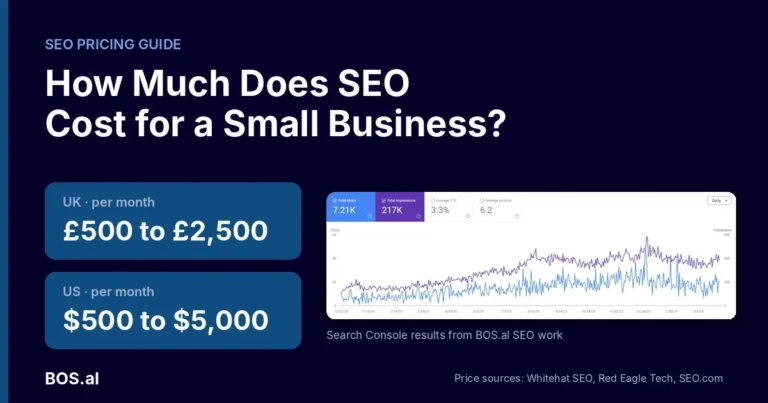
- SEO: Basic on-page SEO is included in most agency quotes. Ongoing SEO work such as content and link building is a separate monthly cost, covered in how much SEO costs for a small business.
What Does a Website Cost Per Month in the UK?
A small business website costs £15 to £60 a month to run in the UK without a maintenance plan, and £45 to £160 a month with one. That covers the domain, hosting, SSL, business email and updates. Over a year, plan for £300 to £800 on top of the build price.
| Cost | Typical price | Billed | Notes |
|---|---|---|---|
| Domain (.co.uk or .com) | £10–£15 | Yearly | Renewals often cost more than the first year |
| Hosting | £5–£30 | Monthly | See the hosting breakdown below |
| SSL certificate | £0 | Included | Free with almost every UK host |
| Maintenance and updates | £30–£100 | Monthly | Optional if you update plugins yourself |
| Business email | £5–£12 | Per user, monthly | Google Workspace or Microsoft 365 |
Hosting is where the monthly figure moves most:
| Hosting type | Monthly cost | Best for |
|---|---|---|
| Shared hosting | £3–£10 | Brochure sites and low-traffic blogs |
| Managed WordPress hosting | £15–£30 | Business sites that need speed and automatic updates |
| VPS hosting | £20–£80 | High-traffic sites and web applications |
How Much Does an Ecommerce Website Cost in the UK?
A small online shop costs £2,000 to £5,000 with a UK agency and £1,500 to £3,000 with a freelancer. Larger stores with hundreds of products, custom integrations or multiple payment methods start around £10,000. Platform fees come on top: Shopify charges a monthly subscription, while WooCommerce is free but needs good hosting.
Our Pro package starts at £2,200 and covers ecommerce with advanced SEO. The final price depends on your catalogue size and integrations, so we quote each shop individually.
How to Get the Best Value
The cheapest quote is rarely the cheapest website. Before you sign anything, ask every agency or freelancer these questions:
- Who owns the website, the domain and the hosting account after launch?
- How many revision rounds are included, and what does an extra round cost?
- What support is included after launch, and for how long?
- Is the site built on a platform another developer can take over later?
- Can you see live websites they built and speak to past clients?
If you are also comparing agencies for marketing beyond the website, our guide on how to choose a marketing agency covers the wider checks.
FAQ
What is the cheapest way to get a professional website? A freelancer or an overseas agency. A DIY builder is cheaper upfront, but the time you spend and the limits on SEO usually cost more in lost enquiries.
How long does it take to build a small business website? Two to six weeks with a freelancer, four to twelve weeks with a UK agency. Our standard timeline is four weeks from discovery to launch.
Is a £500 website worth it? Rarely for a business that needs leads. At that price, speed, mobile design and SEO are usually the first things cut. The quality threshold for a competent freelancer starts around £800 to £1,000.
Do I have to pay for a website every year? Yes. Even after the build is paid, expect £300 to £800 a year for the domain, hosting, email and maintenance.
Key Takeaways
- A UK small business website costs £0 to £10,000+, with most professional five-page sites between £1,200 and £5,000.
- UK agencies charge £3,000 to £10,000+, freelancers £500 to £3,000, and overseas agencies £1,200 to £3,000.
- Running costs add £15 to £160 a month, or £300 to £800 a year.
- BOS.al packages start at £1,200 for a five-page site, with a four-week build.
- Always ask who owns the site after launch and what support is included before you compare prices.