Why the “Skeptics” are wrong and how smart Albanian businesses are gaining the trust of the market.
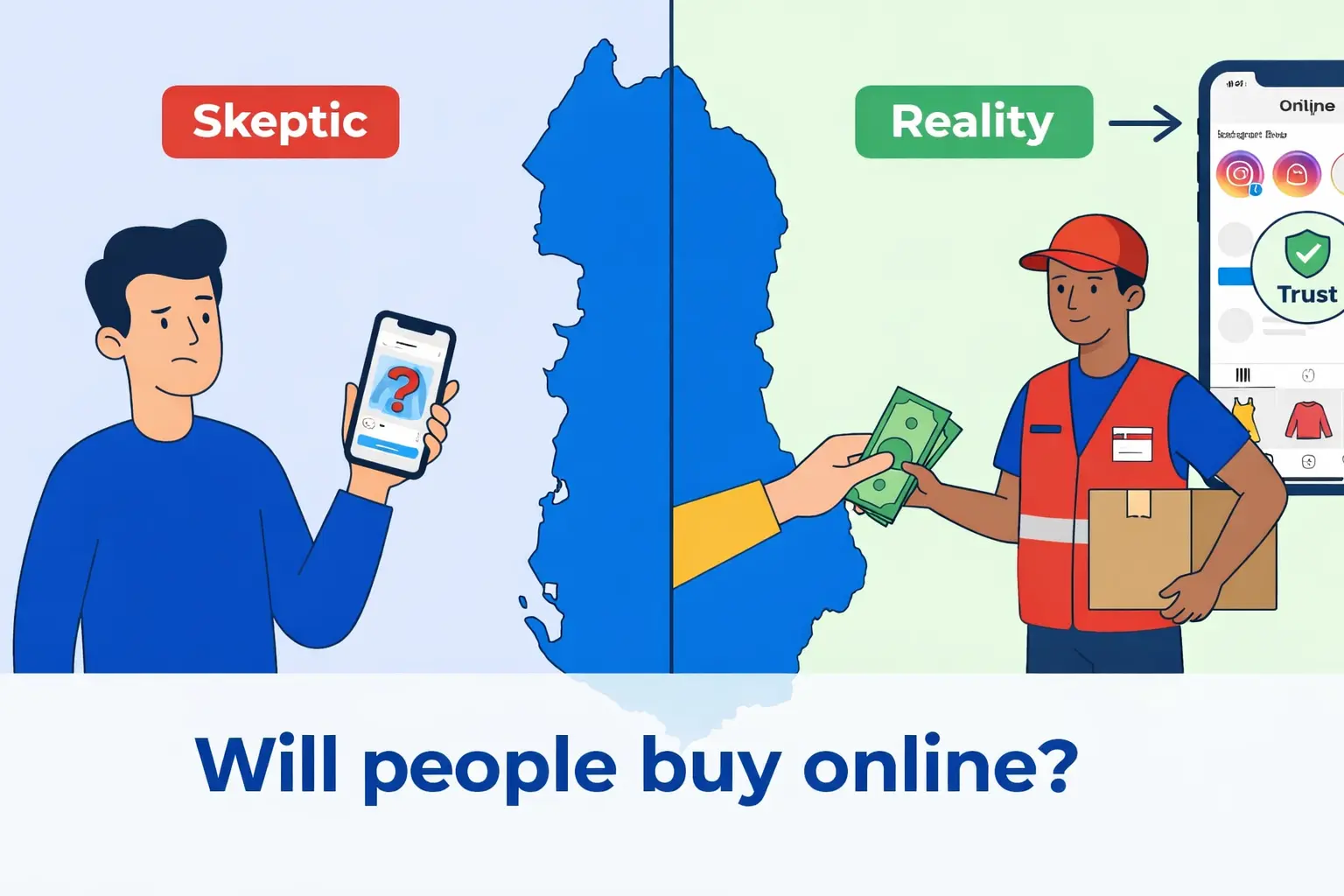
“Albanians don’t shop online.”
I hear this sentence all the time. As a digital marketing expert at bos.al , I meet new business owners and entrepreneurs every day, and I completely understand where this fear comes from. You look at the market, you see people who want to touch the material before they buy it, you see the dominance of physical money (cash) and ask yourself: Is the investment worth it?
The short answer is Yes. The long answer is: Yes, but not in the way you think.
After years of agency experience leading clients from zero to success, here’s the truth about the Albanian consumer and how you can convince them to press the “Order” button.
The problem isn’t the Internet. It’s the fear of fraud.
The biggest challenge we face in agencies isn’t about technology; it’s about trust .
In Albania, we have a specific “trauma”: we order a dress or garment that looks high fashion in the photo, but when it arrives it looks like cheap cloth. This gap between “expectations and reality” has made the Albanian buyer skeptical.
My experience: I’ve seen that consumers aren’t afraid of the internet; they’re afraid of being lied to.
Solution: If you sell clothing (which is the most popular online business in Albania), stock photos (taken from the internet) are your enemy. The strategy we apply is Social Commerce —Real videos on TikTok, unedited photos on Instagram, and real customer reviews.
Lesson: When people see reality , they open their wallets.
Albanian Model: Instagram is the New “Shop”
If you’re expecting everyone to use credit cards on a complex website (.com), you’re waiting for a future that’s not quite here. But if you look at Instagram and TikTok, the market is exploding.
Case Study: I remember a client who came to us with only one physical store. They were convinced that customers should walk in the door to make a purchase. We didn’t force them to build a giant system right away. Instead, we focused on where the attention was.
Change: We moved the sales strategy to Instagram.
The result: Within 6 months , the majority of their shoppers were coming from Instagram, not the sidewalk. They not only survived the transition, but outgrew their brick-and-mortar store.
For boutique stores in Albania, your Inbox (DM) is your checkout.
Do you need a guide on how to open an online store?
Many “gurus” will tell you that you need fully automated card payments. But my experience in the local market tells a different story. The “Cash on Delivery” system is not a barrier; it is the bridge that allows skeptical Albanians to buy with confidence.
By accepting cash, you remove the risk for the buyer. Once you deliver a quality product and they pay you cash, you earn their trust. Next time, they may pay by card. But first, you have to earn the right one.
Expertise wins over “Cheap” pricing every time
There is a myth that online shoppers in Albania only want the cheapest item. Our data proves otherwise.
The Home Products Surprise: We managed a company that sold home products in a highly saturated market with competitors selling cheaply. Logic dictates that the cheapest seller wins, right? Error.
This company positioned itself as an expert . We didn’t just post the product; we posted how to use it, why it was better, and the science behind it.
Bottom line: This became an unexpected “best-seller.” People chose the expert over the cheap alternative because, in a world of online fraud, Authority = Safety.
The Future: AI and the Expectation of Speed
The market is changing faster than ever. In recent years, I have noticed a shift where consumers are using AI models and advanced research to make decisions, before they even talk to you.
My prediction: An online presence is no longer a “nice to have.” It’s key to business survival. In the near future, if a customer can’t find you, verify you, and judge your expertise online, you simply won’t exist to them.
They’re already buying. But they’re not buying from anonymous websites with fake photos. They’re buying from brands that show real content , engage on social media , and demonstrate expertise .
If you’re a business owner who still has doubts, let the portfolio of our agency, bos.al , be your proof: The question is not whether they will buy, but who they will buy from. Will it be you, or your competitor who started posting on TikTok today?
As someone who works in the digital industry every day and is in touch with the latest technologies, I’m always on the lookout for tools that increase productivity. But, to be honest, nothing prepared me for what Google just released.
When I first heard about it, I thought it was just another smart chat. But after installing it and testing it out, I realized two things: first, Google just gave the world one of the most powerful digital creation tools for free ; and second, our industry — and the way we build solutions for customers — will probably never be the same again.
What exactly is Google Antigravity?
To put it simply, for those who are not tech savvy: Imagine having a genius colleague sitting next to you 24/7. You don’t have to dictate every technical detail to him. You just say, “I want to create a website for selling cars,” and he not only gives you the ideas, but starts building the structure, writing the code, and fixing bugs within seconds.
Google Antigravity isn’t just a website where you ask questions. It’s a full-fledged working environment, but one that has the newest artificial intelligence model, Gemini 3 Pro , at its heart.
My Experience: “Wow” and Fear
What surprised me most was the fact that there are no more repetitive manual processes .
We all know the headache of old tools: take the information, copy it, put it somewhere, fix the errors. With Antigravity, this story ends. You tell it what to do, and it changes the project directly . It’s like an invisible hand is working alongside you.
I gave it some complex tasks, things that would normally take hours of research. Gemini 3 solved them with incredible accuracy.
This is where that ambivalent feeling came from. On one hand, I was fascinated. For anyone who builds digital products, this is a dream. But on the other hand, it makes you wonder: Where will we be in 5 years?
What does this mean for our businesses and customers?
Beyond the technical side, this is a huge win for anyone looking for digital services . Using tools like Antigravity means:
Speed: Apps and websites can be built much faster than before.
Focus on Creativity: Instead of wasting time on mundane technical details, we can focus on your business logic and user experience.
Lower cost of experimentation: We can create functional prototypes within a day to test your ideas.
The other side of the coin: Is it perfect?
No, it’s not perfect yet. Despite the power of Gemini 3, there’s one thing that can annoy you: Time . Even for seemingly simple tasks, sometimes you have to wait a bit for the AI to “think” and execute the changes.
There is also the risk of misuse. We are still in the early stages of AI. But I believe that AI will do many things in the future that we can barely imagine today.
Why should you try it (especially the community in Albania)?
It’s Free: Google has made it accessible to everyone, along with the Gemini 3 Pro. This is a golden opportunity for anyone in Albania and Kosovo who wants to experiment.
Speaks Albanian: Yes, you can write your requests in Albanian and he will understand and execute them correctly. This removes any language barrier.
Learn faster: Antigravity explains and solves the problem, allowing you to focus on innovation.
conclusion
Google Antigravity is not just another tool; it’s a game changer. To me, this is a call to adapt. Manual technical work is becoming less and less necessary, while the ability to direct Artificial Intelligence to create real value is becoming essential.
If you want to know how we can use the latest technology to grow your business, contact us today .
If you want a sentence to remember from this article, it’s this:
“The beginning of the end of coding has begun.”
And honestly? I can’t wait to see what comes next.
On November 18, 2025, the digital world held its breath. For about three critical hours, internet giants like ChatGPT, X (Twitter), Spotify, Canva, and Discord became inaccessible, leaving millions of users facing the dreaded “500 Internal Server Error” screen.
While engineers rushed to fix what was officially called a “technical error,” the exact timing of this event raises big questions for any tech news follower . The reason is as simple as it is intriguing: On the same day, Google released its most powerful and revolutionary model yet, the Gemini 3 .
Was this just an unfortunate coincidence, or is there room for bigger questions?
The Official Version: How a “Bug” Paralyzed the World
According to the official report from Cloudflare , which serves as the “backbone” for 20% of global internet traffic, the cause was entirely technical, internal and, unfortunately, human.
The technical details are specific:
Action: A company engineer changed a permission in the database during a routine maintenance procedure.
Chain Reaction: This seemingly insignificant change caused the database to return duplicate rows. This caused an exponential “bloat” of a critical configuration file in the Bot Management system.
Collapse: The software was not programmed to handle such a large file. As a result, the system “paniced” (froze) and blocked legitimate traffic, taking down thousands of websites and banking, social, and commerce applications.
Note from BOS: This shows the importance of careful system maintenance. If you are interested in the security of your infrastructure, read more in our blog on Cyber Attacks .
This is a technically plausible explanation for IT experts. However, not everyone in the online community is convinced that this is the whole story.
Why is the Internet “Boiling” with Theories?
The connection that has captured the public’s imagination is not technical, but temporal . The fact that the Cloudflare system that failed was precisely the one that manages Bots (including traffic from Artificial Intelligence ), and the failure occurred on the very day that the world’s most advanced AI was released, has created the perfect breeding ground for speculation.
Gemini 3 isn’t just an update; it’s being touted as an “Agent” capable model, capable of navigating the web and operating autonomously. Did that scare the existing infrastructure?
What is being talked about on the net? (Internet Scenarios)
Although without concrete evidence, these are the narratives that are dominating discussions on social media and technology news blogs:
Curiosity Overload: A popular theory (and the most likely of the “unofficial” ones) suggests that the traffic generated by humans and bots rushing to test Gemini 3 was so massive that it forced Cloudflare to make emergency updates to its infrastructure. The rush to update its bot filtering rules may have led to the fatal human error.
The “War” of Algorithms: Some users speculate that the current internet infrastructure is struggling to cope with the sophistication of new models like Gemini 3. Was this failure a sign that our security tools have become obsolete in the face of new AI? Was Cloudflare trying to block a sudden influx of data from Google’s new agents?
The “Awakening” Narrative: The most extreme theories, worthy of science fiction films, suggest that the shutdown was an emergency measure (“Kill Switch”) to isolate certain systems. Of course, this remains in the realm of fantasy, but it clearly shows how much the power of AI is mythologized today.
The Timeline of the Blackout
To understand the scale of the incident, here’s how the event unfolded on November 18 (local time):
11:20 UTC: The first reports of internet slowdowns began.
11:48 UTC: Cloudflare confirms the problem, but their status page also goes down.
12:30 UTC: Major platforms like OpenAI and Discord were completely down.
14:30 UTC: The situation began to normalize after engineers restored the old version of the file.
Conclusion: A Reminder of the Fragility of the Internet
Whether you believe the dry technical explanation or are attracted by mysterious coincidences, one thing is certain for everyone who follows technology news :
November 18, 2025, showed how fragile our digital ecosystem is. Whether from a single line of code written incorrectly or the pressures of a new era of Artificial Intelligence, the internet could be “shut down” more easily than we think. In a world where AI is becoming increasingly autonomous, the question remains: Are we ready for the traffic it will bring?
Coincidence or an inevitable consequence of technological evolution? Judge for yourself.
Figuring out how to choose a marketing agency in Albania can be difficult. Are you searching on Google and feeling overwhelmed by the choices? You are not alone. As an agency ( BOS.al ) with over 7 years of experience and partnerships with over 85 businesses, we want to share some honest advice with you.
Our goal is not to sell you our services in this article, but to help you ask the right questions, no matter who you choose.
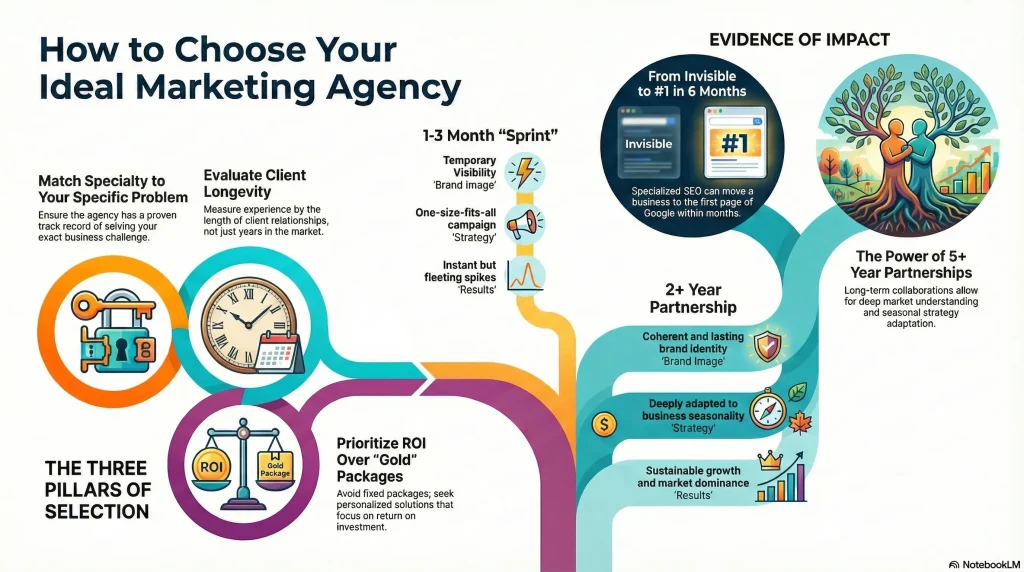
Here’s how to find the right agency based on three key factors: Specialty, Experience , and Budget .
1. Specialty: Do They Solve Your Specific Problem?
Every agency has its strengths. Some excel at branding and creative video. Others are experts at social media management and audience engagement. Some, like us, have a strong technical focus on SEO (Search Engine Optimization) .
The biggest problem we see with our new clients? “We’re not showing up on Google.”
When talking to an agency, don’t just ask, “Do you do SEO?” Ask, “Can you show me an example of success?”
Case in point: A car rental business came to us with a clear problem: they weren’t showing up on the first pages of Google at all for their industry. This meant that all their customers were going to their competitors. After a 2-3 month partnership, we not only got them on the first page of Google , but within 6 months, they were ranked #1 for a high-volume keyword.
Our advice: Find an agency that has a proven track record of success in solving the exact problem you have.
2. Experience: Are You Looking for a 1-Month “Sprint” or a Long-Term Partner?
Many businesses want instant results. And that’s understandable. But real marketing, the kind that builds a lasting brand, is a marathon, not a sprint.
An agency’s experience is not measured solely by years in the market, but by the length of their client relationships . Do they keep clients for 2 months or 2+ years?
Long-term partnerships are essential. We say this as a marketing agency with long experience, especially for businesses in the service and tourism sectors.
Example from our experience: We have had a wonderful partnership for over 5 years with Bujtina Mera . This long-term collaboration has allowed us to deeply understand the seasonality of their business, adapt our strategies each year, and build a coherent online image. This type of relationship led to a significant increase in their presence, especially on social networks , something that a short 3-month campaign would never have achieved.
Our tip: Ask the agency about their oldest client. This will tell you more about their sustainability than any other presentation.
3. Budget: How Much Should I Spend?
This is the most common question. How much does digital marketing cost?
The honest answer is: It depends.
Small businesses and those just starting out on social media (like Instagram shops) naturally have different budgets than medium or large businesses. A good agency won’t give you a fixed price without first understanding your goals.
With us, every collaboration begins with an initial meeting and a market analysis . We do not offer standard “gold” or “silver” packages, because your business is not standard. We offer personalized solutions that fit both your goals and your budget.
The goal shouldn’t be to find the cheapest agency. The goal is to find the one that offers the highest return on investment (ROI) .
Our advice: Be open about your budget, but also ask what the expected results are for that budget. A good agency will tell you honestly if your expectations are realistic for the budget you have. If you’re specifically wondering about website costs, here’s our full breakdown of how much a website costs in the UK in 2026 — covering everything from DIY builders to agency pricing.
At the end of the day, choosing a marketing agency is like choosing a business partner. You need a team that not only has the technical skills (like Web Development , Social Media , SEO , and Graphic Design ), but also believes in your vision and works closely with you to make it happen. And if you’re considering agencies outside your country to get better value, here’s our full guide on how to safely outsource web design overseas.
We hope this guide has helped you better understand how to choose a marketing agency based on specialty, experience, and budget.
And if you are a small or medium-sized business in Albania looking for a long-term partner to grow, let’s talk.
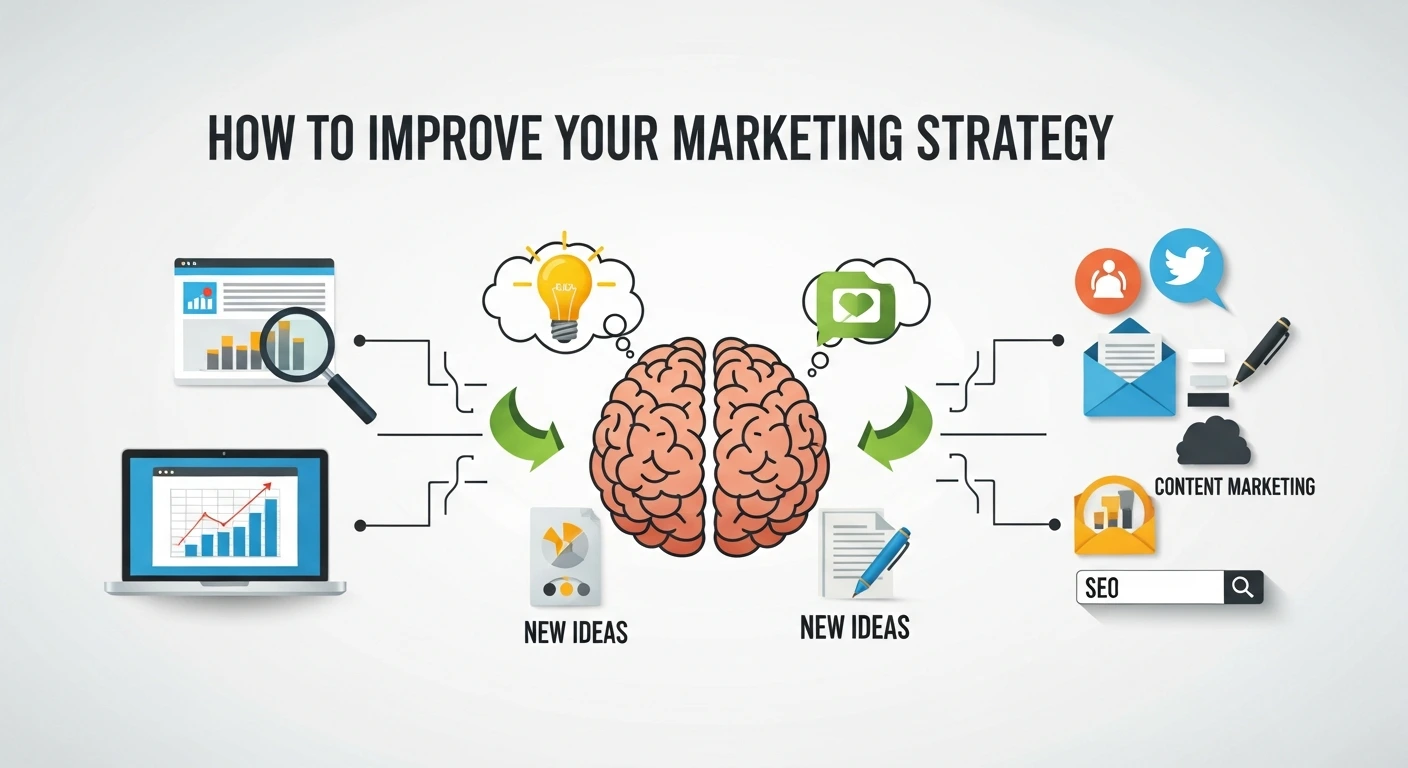
Is your marketing on autopilot? If you’re running the same campaigns, targeting the same people, and getting the same (or dwindling) results, you’re not alone. The marketing landscape changes at lightning speed, and a strategy that worked last year might be a liability today.
Feeling “stuck” is a clear sign that it’s time to go back to the drawing board. But improving your marketing strategy isn’t about scrapping everything and starting over. It’s about auditing, refining, and optimizing—transforming your marketing from a set of “random acts” into a cohesive, data-driven engine for growth.
This comprehensive guide will walk you through a 10-step framework to analyze what’s broken, identify new opportunities, and build a strategy that delivers real, measurable results.
Our Philosophy: The “Why” vs. The “What”
Before we dive in, let’s clear up the single biggest mistake we see: confusing strategy with tactics.
Tactics are the things you do: “run a Facebook ad,” “post on LinkedIn,” “write a blog post.”
Strategy is the reason you do them: “We will become the go-to authority for X audience (strategy) by creating the most in-depth content on Y topic (tactic).”
You can’t “improve” your marketing by just doing more tactics. You improve it by strengthening the “why” that guides every action. This 10-step guide is designed to help you build that strategic foundation.
Why Your Current Strategy Isn’t Working (And Why It Matters)
Often, marketing strategies fail for one of two reasons:
Stagnation: The strategy is “set it and forget it.” You haven’t updated your audience personas, you’re still using channels that have peaked, and your messaging is tired.
Vagueness: Your strategy isn’t a strategy at all. It’s a collection of tactics (like “post on social media” or “run ads”) with no clear, overarching goals, KPIs, or connection to your core business objectives.
A weak strategy doesn’t just waste your marketing budget. It wastes time, burns out your team, and, worst of all, gives your competitors a wide-open lane to capture market share.
How to Improve Your Marketing Strategy: The 10-Step Framework
Ready to rebuild? Follow these 10 actionable steps to create a smarter, more powerful marketing strategy.
1. Re-Audit Your Target Audience & Buyer Personas
You can’t have a good marketing strategy without knowing exactly who you’re marketing to. The problem? Your audience from two years ago is probably not your audience today.
Go Beyond Demographics: Ditch the vague “Millennial Marketers” persona. Get specific.
Identify Pain Points: What specific problems do they face? What are their “Jobs to Be Done”?
Find Their Watering Holes: Where do they actually spend their time online? Is it LinkedIn, a specific Subreddit, or listening to niche podcasts?
Use Real Data: Don’t guess. Talk to your sales team, conduct customer surveys, and read support tickets. Your best data comes from your actual customers.
2. Conduct a Deep Competitor Analysis
Your marketing doesn’t exist in a vacuum. A deep dive into your competitors’ strategies can reveal gaps in the market you can exploit.
Identify 3-5 Top Competitors: Include both direct (offer the same product) and indirect (solve the same problem) competitors.
Analyze Their Channels: Where are they getting traffic? (Use tools like Semrush or Ahrefs for this). Are they dominant in SEO? Are they running a ton of paid ads?
Study Their Messaging: What is their Unique Value Proposition (UVP)? How are they positioning themselves against you?
Look for the “Gap”: What are they not doing? Are they ignoring a specific customer segment? Is their content low-quality? This is your opening.
3. Perform a Comprehensive SWOT Analysis
It’s a classic for a reason. A SWOT (Strengths, Weaknesses, Opportunities, Threats) analysis is the bridge between your internal reality and the external market.
Strengths (Internal): What do you do better than anyone? (e.g., “Deep technical expertise,” “Amazing customer service”).
Weaknesses (Internal): Where do you fall short? (e.g., “Small budget,” “Low brand awareness,” “No SEO presence”).
Opportunities (External): What market trends can you capitalize on? (e.g., “New ‘remote work’ customer segment,” “A competitor just went out of business”).
Threats (External): What’s on the horizon? (e.g., “New technology making our product obsolete,” “Changing data privacy laws”).
4. Review and Refine Your Unique Value Proposition (UVP)
Your UVP is your “why.” It’s the clear, simple answer to the question: “Why should I buy from you and not your competitor?” If you can’t articulate this in one sentence, your marketing will be muddled.
A strong UVP is:
Specific: “We help B2B SaaS companies cut their churn rate.”
Problem-Focused: “The only project management tool that’s actually easy to use.”
Unique: “The world’s first carbon-negative running shoe.”
5. Analyze Your Current Marketing Channels
Stop spending money on channels just “because.” It’s time for a data-driven audit. Pull your analytics for the last 6-12 months and find the hard-number answers to these questions:
Which channel drives the most traffic? (e.g., Organic Search, Social, Paid).
Which channel drives the most leads or sales? (This is often different from traffic!)
What is the Customer Acquisition Cost (CAC) for each channel?
Which channels are underperforming or draining the budget?
Be ruthless. If your Facebook ads are breaking the bank with zero conversions, it’s time to pause and re-evaluate, or cut that channel entirely.
A Real-World Example: The 80/20 Channel Audit
We recently audited a B2B SaaS client who was spending 80% of their marketing budget on LinkedIn Ads, but their analytics told a different story.
The “Vanity” Metric: LinkedIn drove 50% of their traffic.
The “Money” Metric: We discovered that “Organic Search,” while only 20% of their traffic, was responsible for 75% of their demo-qualified leads.
The Fix: We didn’t kill the LinkedIn budget. We re-allocated 40% of it away from “brand awareness” ads and into a new “Content & SEO” program.
The Result: In 6 months, their organic leads doubled, and their overall Customer Acquisition Cost (CAC) dropped by 35%. That’s strategic optimization.
6. Set Clear, Measurable KPIs and Goals
“Increase brand awareness” is not a goal. It’s a wish. An improved marketing strategy is built on SMART goals (Specific, Measurable, Achievable, Relevant, Time-bound).
Bad Goal: “We want more leads.”
Good Goal: “We will increase our Marketing Qualified Leads (MQLs) from organic search by 25% by the end of Q4 by publishing four new, optimized blog posts per month.”
7. Double Down on Content & SEO
In 2024 and beyond, content and SEO are not optional. They are the foundation of a sustainable, long-term marketing strategy. While paid ads get you traffic today, great content gets you traffic forever.
This is how you build E-E-A-T (Experience, Expertise, Authoritativeness, and Trust).
Pillar Pages: Create long-form, comprehensive guides on your core topics (like this one!).
Topic Clusters: Support your pillars with “spoke” articles that target long-tail keywords.
Helpful Content: Write for your user first, not the algorithm. Answer their questions in detail.
8. Explore and Test One New Channel
Once you’ve optimized your core channels, it’s time to experiment. The key is to do this in a controlled, scientific way.
Form a Hypothesis: “I believe our target audience is on TikTok, and we can reach them with short-form educational videos.”
Set a Budget: “We will dedicate $1,000 and 20 team hours to this test in one month.”
Define Success: “Success means 10,000 views and 50 new trial sign-ups from our bio link.”
Test one new channel at a time. It could be LinkedIn (for B2B), TikTok, a new-in-person event, or even direct mail.
9. Align Your Sales and Marketing Teams
This is the secret weapon for B2B companies. Misalignment between sales and marketing (Smarketing) is the #1 killer of good leads.
Create a Shared Definition: What is a “lead”? What is an “MQL” (Marketing Qualified Lead) vs. an “SQL” (Sales Qualified Lead)?
Establish a Handoff: What is the exact process for a lead to be passed from marketing to sales?
Share Feedback: Sales must report back to marketing on lead quality. This is the only way marketing can learn what’s working.
10. Create a System for Testing, Measuring, and Iterating
Your new strategy is not a final document. It’s a living, breathing machine that needs constant tuning. Your most important “step” is to build a “loop.”
The Loop:Build -> Measure -> Learn -> Iterate.
Build: Launch the new campaign or blog post.
Measure: Track its performance against your KPIs (see Step 6).
Learn: Analyze the data. Why did it work? Why did it fail?
Iterate: Make one small, controlled change (an A/B test) and run the loop again.
Q: How often should I review my marketing strategy?
A: You should conduct a deep, comprehensive review (like this 10-step process) annually. However, you should be reviewing your KPIs and channel performance on a monthly and quarterly basis to make real-time adjustments.
Q: What is the difference between a marketing strategy and a marketing plan?
A: A strategy is your “why” and “what.” It’s your long-term vision, your target audience, and your core business goals. The plan (or tactics) is your “how” and “when.” It’s the specific actions you’ll take, like “run a 3-month Google Ads campaign” or “post 3x a week on LinkedIn.”
Q: What’s the most important part of improving a marketing strategy?
A: Moving from assumptions to data. The single biggest improvement you can make is to base your decisions on real-world data (from your analytics, sales team, and customers) instead of “what you think” will work.
Your Next Steps to a Smarter Strategy
Improving your marketing strategy is an ongoing process, not a one-time project. It’s about staying curious, being willing to challenge your own assumptions, and letting data (not ego) lead the way.
Start by picking one step from this guide. You don’t have to do it all at once. The journey to a high-performing marketing engine begins with a single, intentional, data-driven step.
In a world where the internet reigns supreme, the question arises: Can digital marketing truly make you rich? As businesses shift to online platforms, the financial landscape is transforming, presenting unprecedented opportunities for those willing to learn and adapt. This article dives deep into the world of digital marketing, unveiling strategies that can catapult your financial success. From mastering social media advertising to leveraging the power of SEO, the paths to wealth in the digital realm are diverse and exciting. Join us as we explore how savvy marketing techniques can not only boost your income but also create sustainable financial growth. Step into the world of digital marketing and unlock the secrets to turning your passion into profit!
Understanding Digital Marketing and Its Potential
Digital marketing encompasses all marketing efforts that use an electronic device or the internet. Businesses leverage digital channels such as search engines, social media, email, and websites to connect with current and prospective customers. This form of marketing is not just a trend; it represents a fundamental shift in the way businesses reach and engage with their audience. It’s about meeting your audience where they are: online. The potential of digital marketing lies in its ability to reach a global audience, target specific demographics, and measure results in real-time.
One of the primary advantages of digital marketing is its scalability. Unlike traditional marketing methods, which can be cost-prohibitive for small businesses, digital marketing campaigns can be adjusted to fit almost any budget. Whether you’re a small business owner or a large corporation, digital marketing allows you to scale your efforts and reach a broader audience without a proportional increase in costs. This scalability is crucial for businesses looking to grow and expand their market reach.
Moreover, digital marketing offers unprecedented levels of engagement and interaction. Through social media, email marketing, and other online tools, businesses can communicate directly with their customers in real-time. This direct interaction builds trust and loyalty, as customers feel more connected to the brands they support. Additionally, digital marketing provides valuable data and insights that can be used to refine and improve marketing strategies, ensuring that businesses are always one step ahead of their competition.
The Financial Landscape of Digital Marketing
The financial landscape of digital marketing is vast and varied, offering numerous avenues for generating revenue. At the heart of this landscape is the ability to reach a targeted audience with precision. Traditional marketing methods often involve a lot of guesswork and a shotgun approach, hoping to hit some potential customers. Digital marketing, on the other hand, allows for pinpoint targeting, ensuring that your message reaches the people most likely to be interested in your product or service.
Another critical aspect of the financial landscape of digital marketing is return on investment (ROI). Digital marketing campaigns are often more cost-effective than traditional marketing methods, offering a higher ROI. This is due to the ability to track and measure the effectiveness of campaigns in real-time, allowing for adjustments and optimizations that can improve performance and reduce costs. Additionally, the ability to target specific demographics and interests means that businesses are not wasting resources on reaching people who are unlikely to convert.
The revenue potential in digital marketing is also significant. From selling products and services online to earning through affiliate marketing and advertising, the opportunities are endless. Businesses can create multiple streams of income by leveraging different digital marketing strategies. For example, a company might generate revenue through e-commerce sales, sponsored content, affiliate commissions, and pay-per-click advertising, all while building a loyal customer base that continues to provide value over time.
Key Strategies for Earning Through Digital Marketing
One of the key strategies for earning through digital marketing is content marketing. By creating valuable, relevant, and consistent content, businesses can attract and retain a clearly defined audience. Content marketing not only helps in building brand awareness but also in establishing authority and trust. When people see that you are knowledgeable in your field, they are more likely to purchase from you. Blogs, videos, podcasts, and social media posts are all effective forms of content marketing that can drive traffic and generate leads.
Another essential strategy is email marketing, which remains one of the most effective digital marketing channels. By building an email list and sending targeted messages to subscribers, businesses can nurture leads and convert them into customers. Email marketing allows for personalized communication, which can significantly increase engagement and conversion rates. Additionally, automated email campaigns can save time and ensure that leads are consistently nurtured through the sales funnel, leading to higher revenue.
Pay-per-click (PPC) advertising is also a powerful strategy for earning through digital marketing. With PPC, businesses can bid on keywords and pay a fee each time their ad is clicked. This method allows for immediate visibility on search engines and other platforms, driving targeted traffic to your website. PPC campaigns can be highly effective when optimized correctly, ensuring that the right people see your ads at the right time. By continually testing and refining your campaigns, you can maximize your ROI and drive significant revenue through PPC advertising.
Building a Profitable Online Business Model
Building a profitable online business model begins with identifying a niche market and understanding your target audience. The internet is a vast space, and trying to appeal to everyone is a recipe for disaster. Instead, businesses should focus on a specific niche where they can provide unique value. Conduct market research to understand the needs, preferences, and pain points of your target audience. This information will guide your product development and marketing strategies, ensuring that you are meeting the demands of your market.
Once you have identified your niche, the next step is to develop a strong value proposition. Your value proposition is what sets you apart from your competitors and convinces customers to choose your product or service. It should clearly communicate the benefits that customers will receive and why your offer is the best solution to their problem. A compelling value proposition is crucial for attracting and retaining customers in a competitive online market.
Another critical component of a profitable online business model is a robust sales funnel. A sales funnel is the process that guides potential customers through the journey from awareness to purchase. It typically consists of several stages, including awareness, interest, decision, and action. By creating a well-designed sales funnel, businesses can nurture leads and convert them into paying customers. This involves using various marketing tactics, such as content marketing, email marketing, and retargeting ads, to move leads through each stage of the funnel.
Leveraging Social Media for Financial Gain
Social media platforms have become essential tools for businesses looking to achieve financial success. With billions of users worldwide, platforms like Facebook, Instagram, Twitter, and LinkedIn offer unparalleled opportunities for reaching and engaging with potential customers. By leveraging social media, businesses can increase brand awareness, drive traffic to their website, and generate leads and sales. The key to success on social media is creating engaging content that resonates with your audience and encourages interaction.
One effective way to leverage social media for financial gain is through influencer marketing. Influencers have large followings on social media and can sway the opinions and purchasing decisions of their audience. By partnering with influencers who align with your brand, you can reach a broader audience and build trust with potential customers. Influencer marketing can take various forms, including sponsored posts, product reviews, and giveaways. The authenticity and credibility of influencers can significantly impact your brand’s reputation and drive sales.
Another powerful social media strategy is running paid advertising campaigns. Social media platforms offer advanced targeting options that allow businesses to reach specific demographics, interests, and behaviors. By creating compelling ads and targeting them to the right audience, businesses can drive traffic and conversions. Social media advertising is highly measurable, allowing for real-time adjustments and optimizations to maximize ROI. Additionally, retargeting ads can be used to re-engage users who have previously interacted with your brand, increasing the likelihood of conversion.
SEO: The Cornerstone of Digital Wealth
Search engine optimization (SEO) is the process of optimizing your website and content to rank higher in search engine results pages (SERPs). It is a fundamental aspect of digital marketing and a cornerstone of online financial success. Higher rankings in search results lead to increased visibility, traffic, and ultimately, revenue. SEO involves various techniques, including keyword research, on-page optimization, link building, and content creation, all aimed at improving your site’s authority and relevance in the eyes of search engines.
Keyword research is the foundation of SEO. By identifying the keywords and phrases that your target audience is searching for, you can create content that addresses their needs and queries. Tools like Google Keyword Planner and Ahrefs can help you find relevant keywords with high search volumes and low competition. Once you have identified your target keywords, incorporate them naturally into your content, titles, meta descriptions, and headers to improve your chances of ranking higher in search results.
On-page optimization involves optimizing individual pages on your website to improve their search engine rankings. This includes optimizing your title tags, meta descriptions, headers, and content for your target keywords. Additionally, ensuring that your website is mobile-friendly, has fast loading times, and provides a good user experience are critical factors for on-page SEO. Search engines prioritize websites that offer a seamless and valuable experience to users, so it’s essential to focus on these aspects.
Link building is another crucial component of SEO. It involves acquiring high-quality backlinks from other reputable websites in your industry. Backlinks act as votes of confidence, signaling to search engines that your content is valuable and trustworthy. Strategies for building backlinks include guest blogging, creating shareable content, and reaching out to industry influencers and websites for collaborations. By building a robust backlink profile, you can improve your site’s authority and increase its chances of ranking higher in search results.
Affiliate Marketing: A Pathway to Passive Income
Affiliate marketing is a performance-based marketing strategy where businesses reward affiliates for driving traffic or sales through their referral links. It is a popular method for generating passive income, as affiliates can earn commissions by promoting products or services without having to create or manage them. This model benefits both businesses and affiliates, as businesses gain exposure and sales, while affiliates earn a passive income by leveraging their audience and marketing skills.
To succeed in affiliate marketing, it’s essential to choose the right affiliate programs and products to promote. Look for programs that offer competitive commissions, high-quality products, and a good reputation. Additionally, choose products that align with your niche and audience’s interests. Promoting products that you genuinely believe in and that provide value to your audience will increase your credibility and trust, leading to higher conversions and commissions.
Creating valuable content is crucial for affiliate marketing success. Whether it’s blog posts, reviews, videos, or social media posts, your content should provide useful information and genuinely help your audience. By creating content that addresses your audience’s needs and pain points, you can build trust and encourage them to make a purchase through your referral links. Additionally, using various marketing channels, such as email marketing, social media, and SEO, can help you reach a broader audience and increase your chances of earning commissions.
Tracking and analyzing your performance is also essential in affiliate marketing. Use tracking tools and analytics to monitor your clicks, conversions, and commissions. This data will help you understand what’s working and what’s not, allowing you to optimize your strategies and improve your results. By continually testing and refining your approach, you can maximize your earnings and achieve long-term success in affiliate marketing.
The Role of Content Creation in Wealth Generation
Content creation is at the heart of digital marketing and plays a crucial role in wealth generation. High-quality content attracts, engages, and converts potential customers, making it an invaluable asset for any online business. By consistently producing valuable content, businesses can establish authority, build trust, and drive traffic and leads. Whether it’s blog posts, videos, podcasts, or social media content, the key is to provide value and address the needs and interests of your audience.
One of the primary benefits of content creation is its ability to drive organic traffic. By creating content that is optimized for search engines, businesses can attract visitors who are actively searching for information related to their products or services. This organic traffic is highly valuable, as it consists of users who are already interested in what you have to offer. Additionally, high-quality content is more likely to be shared and linked to, further increasing your visibility and authority in your industry.
Content creation also plays a vital role in lead generation and nurturing. By offering valuable content in exchange for contact information, businesses can build their email lists and generate leads. Once leads are captured, businesses can use content to nurture them through the sales funnel. This involves providing relevant and personalized content that addresses their needs and guides them towards a purchase decision. By consistently delivering value, businesses can build relationships with their leads and increase their chances of conversion.
Monetizing content is another way to generate wealth through content creation. This can be done through various methods, such as sponsored content, advertising, and selling digital products. For example, bloggers and influencers can earn money by partnering with brands for sponsored posts or by displaying ads on their websites. Additionally, businesses can create and sell digital products, such as e-books, courses, and membership sites, providing valuable content that their audience is willing to pay for. By diversifying income streams and leveraging the power of content, businesses can achieve sustainable financial growth.
Case Studies: Success Stories in Digital Marketing
To illustrate the potential of digital marketing, let’s look at some success stories of businesses that have achieved significant financial success through digital marketing strategies. These case studies demonstrate how effective digital marketing can transform businesses and create opportunities for wealth generation.
One notable success story is that of Dollar Shave Club, a subscription-based service that delivers razors and grooming products to customers. The company’s viral marketing video, which humorously highlighted the benefits of their service, garnered millions of views and propelled the brand to fame. By leveraging the power of content marketing and social media, Dollar Shave Club quickly gained a massive following and achieved substantial revenue growth. In 2016, the company was acquired by Unilever for $1 billion, showcasing the financial potential of a well-executed digital marketing strategy.
Another example is Glossier, a beauty brand that has achieved tremendous success through its digital-first approach. Glossier built its brand by leveraging social media and user-generated content. The company actively engaged with its audience on platforms like Instagram, encouraging customers to share their experiences and product recommendations. This authentic and community-driven approach helped Glossier build a loyal customer base and achieve significant sales growth. In 2019, the company was valued at $1.2 billion, highlighting the power of social media and content marketing in driving financial success.
Pat Flynn, an entrepreneur and online marketer, is a prime example of how affiliate marketing can lead to passive income and financial success. Flynn started his blog, Smart Passive Income, to share his experiences and strategies for generating passive income. Through valuable content and transparency, he built a loyal following and became a trusted authority in the online business space. By promoting affiliate products that aligned with his audience’s interests, Flynn earned substantial commissions and diversified his income streams. His success illustrates the potential of affiliate marketing and content creation in achieving financial independence.
Conclusion: Steps to Start Your Journey to Financial Success
Digital marketing offers a wealth of opportunities for those willing to learn and adapt. By understanding the potential of digital marketing, implementing key strategies, and leveraging the power of content, SEO, and social media, businesses can achieve significant financial success. Whether you’re looking to build a profitable online business, generate passive income through affiliate marketing, or enhance your existing marketing efforts, the possibilities are endless.
To start your journey to financial success in digital marketing, begin by identifying your niche and understanding your target audience. Develop a strong value proposition that sets you apart from your competitors and create a robust sales funnel to guide potential customers through their journey. Leverage the power of social media to increase brand awareness and engagement, and optimize your website and content for search engines to drive organic traffic.
Focus on creating high-quality content that provides value to your audience and addresses their needs and interests. Consider diversifying your income streams by exploring affiliate marketing, sponsored content, and digital product sales. Continuously track and analyze your performance to optimize your strategies and achieve the best results.
Remember that success in digital marketing requires dedication, creativity, and a willingness to adapt to changing trends and technologies. By staying informed and continually refining your approach, you can unlock the secrets to turning your passion into profit and achieve sustainable financial growth.
Ever wondered what a marketing agency actually does? For many business owners, it feels like a mystery box. You give them money, and hopefully, new customers appear. But it’s not magic, and it’s much more of a partnership than you might think.
Think of an agency as a specialized extension of your own team. Businesses hire them to get expert help, a fresh pair of eyes on their challenges, and the power to grow faster. Understanding their process is the key to a great relationship. So, let’s break down exactly how they work in simple terms.
What’s Inside a Marketing Agency? The Four Key Teams
A good agency is like a well-organized workshop with different specialists all working together. Here are the four main teams you’ll find.
A. The Planners (The “Strategic Brain”)
This team creates the game plan. Before any work starts, they do their homework to figure out the best way to help your business win.
They investigate: They look at your competitors, learn about your ideal customers, and check the health of your website.
This team takes all the creative work and puts it out into the world for people to see. They are the activation specialists.
They help you get found on Google: They use techniques (called SEO) to help your website show up in search results without paying for ads.
They run the ads: They manage paid advertising campaigns on platforms like Google and Facebook to bring in traffic and new leads quickly.
They build your community: They manage your social media accounts and use email marketing to build relationships with your customers.
D. The Analysts (The “Nervous System”)
This team watches the numbers to see what’s working and what isn’t. They use data to make smart decisions.
They manage the tools: They set up and use software (like Google Analytics) to track every click, visit, and sale.
They build the scoreboard: They create simple reports (dashboards) that show you how the campaigns are performing at a glance.
They find the story in the data: They don’t just give you numbers; they explain what those numbers mean and suggest what to do next.
What It’s Like to Work With an Agency: Step-by-Step
Starting with an agency follows a clear path designed to make sure everyone is on the same page.
Step 1: Getting to Know Each Other: It all begins with a conversation to see if you’re a good fit. If so, they’ll present a custom plan for your business. A kick-off meeting then gets everyone formally started.
Step 2: Building the Foundation (First 3 Months): The agency will start with some “quick wins” (like fixing technical issues on your site) while building out the long-term plan with you.
Step 3: Launching and Learning: The agency will launch campaigns, watch the results, and make adjustments. Communication is constant here—you’ll always know what’s going on.
Step 4: Improving and Growing: Based on the data, the agency will fine-tune the campaigns to get better results. You’ll have regular meetings to discuss progress and plan for the future.
What Makes a Great Agency Stand Out?
Many agencies offer the same services, but the best ones have a few things in common that make all the difference.
They talk to you often and are honest: They keep you in the loop, celebrate the wins, and are upfront about the challenges.
They know your industry: They are experts in your specific field, so they already understand your customers and your competition.
They aren’t afraid to try new things: They love to experiment with new ideas and use data to find out what works best.
They care about your business goals: They focus on what truly matters to you—like sales and growth—not just on marketing buzzwords. You can see how this focus translates into our work.
Conclusion: More Than a Service, a Partner in Growth
Understanding how a marketing agency works shows that it’s a partnership. You’re not just hiring someone to do a task; you’re bringing on a team of experts who are invested in helping your business succeed. A good agency is a powerful engine for your growth.
Do you have a great product or service, but the right customers can’t find you online? In today’s digital world, expecting customers to come to you randomly is like having a store without a sign. You need a strategy to show up when they need you most.
This is where the power of Google Ads comes into play.
What is Google Ads and Why Does Your Business Need It?
Google Ads (formerly known as Google AdWords) is Google ‘s online advertising platform. Simply put, it allows your business to appear at the top of Google search results at the exact moment potential customers search for the products or services you offer.
Think of it this way: when someone in Tirana searches for “best Italian restaurant” or “online shoe store in Albania,” Google Ads ensures that your business is one of the first answers they see. It’s not magic, it’s smart marketing.
The Main Advantages of Google Ads for the Albanian Market
High Intent Customers: Unlike social networks where ads interrupt users, on Google people are actively searching for a solution. They are ready to buy. By showing up at the right moment, you capture high-quality customers.
Precise Geographic Targeting: Do you want to appear only to customers in Durrës, Vlora, or only within the Tirana Ring Road? With Google Ads, you can target with surgical precision, ensuring that your budget is spent only on the audience that matters.
Full Budget Control: No surprises. You decide exactly how much you want to spend per day or per month and only pay when someone clicks on your ad (Pay-Per-Click – PPC Model). It’s flexible and suitable for any size business.
Measurable Results and ROI (Return on Investment): Every click, every visit, and every conversion (sale or contact) is fully measurable. We show you exactly how much value every dollar invested is generating, allowing you to make data-driven decisions.
Competitive Advantage: Chances are your competitors are already using Google Ads. If you’re not there, you’re missing out on a huge market share. Being present on Google is no longer an option, but a necessity.
Managing a Google Ads campaign requires more than just creating an ad. It requires expertise, ongoing analysis, and a deep understanding of the local market. This is where we make the difference.
Certified Expertise: Our team consists of Google-certified specialists who know every detail of the platform to maximize your results.
Personalized Strategy: We don’t believe in “one-size-fits-all” solutions. We analyze your business, objectives, and competition to build a personalized strategy that works for you.
Advanced Keyword Research: We find the exact keywords that your Albanian customers use to find you, ensuring that your ad appears in front of the right audience.
Continuous Optimization: Our work doesn’t end with the campaign launch. We continuously monitor, analyze, and optimize your campaigns to reduce costs and increase return on investment (ROI).
Transparent Reporting: You’ll always be aware of the performance of your campaigns. We provide clear and understandable reports that show exactly where your budget is going and what results it’s achieving.
Ready to Grow Your Business?
Don’t let your competitors take all your customers from Google. It’s time to invest in a strategy that delivers tangible and measurable results.
Contact us today for a free consultation and a free analysis of your Google potential. Let’s build your online success together!
Choosing the right marketing partner is a strategic decision that can determine the growth of a business in the dynamic Albanian market. With hundreds of agencies offering different services, how can you find one that not only understands your vision, but also has the ability to deliver concrete and measurable results?
To help you in this crucial process, we have conducted an in-depth analysis of the national market. We have selected the 6 most successful and influential agencies in Albania, based on their client portfolio , national reputation , specialization and innovation .
This article will serve as a clear guide to finding the ideal marketing partner (marketing agency), regardless of where your business operates in Albania
1. BOS Marketing
BOS Marketing (Business Online Solution) is a full-service agency that is renowned for its ability to provide complete digital solutions. Combining technical expertise in Web Development and SEO with advanced marketing strategies, they are an ideal partner for Albanian businesses seeking a strong online presence. Their focus on measurable results and long-term partnerships makes them a reliable choice for sustainable growth.
Main Specialization: Web Development, SEO, Integrated Digital Strategies.
Ideal for: Businesses across Albania looking for a single partner to manage their entire online presence.
As part of a prestigious global network, McCann Tirana operates at the highest level of the communication and branding industry in Albania. They are the leading choice for large corporations and national brands that aim to build a strong and sustainable image. Their strength lies in strategic planning and high-impact creative campaigns.
Main Specialization: Branding, Communication Strategy, Large Creative Campaigns.
Ideal for: Large corporations and brands with national reach.
Vatra is a “Made in Albania” success story, known throughout the country for its creativity and the powerful visual identities it creates. With a rich portfolio that includes important national clients, Vatra offers complete solutions from graphic design and branding, to event management and digital marketing, positioning itself as a creative leader in the market.
Main Specialization: Branding & Design, Creative Communication, Event Management.
Ideal for: Albanian businesses that want a unique visual identity and impactful campaigns.
With over 15 years of experience, Grow.al is one of the pioneers of digital marketing in Albania. This long experience gives them a deep understanding of the local market and strategies that work. They are experts in technical areas such as SEO and PPC (Google Ads), helping businesses across the country build a strong online foundation for long-term success.
Main Specialization: Long-Term Digital Strategy, SEO, PPC (Google Ads).
Ideal for: Established businesses looking for an experienced partner to optimize their digital presence.
Marketing One is a 360-degree marketing agency with a wide range of services that cover every need of a modern business. From branding and web design, to CRM systems management and full digital campaigns, they have the capacity to manage complex projects for clients throughout Albania, serving as an integrated strategic partner.
Main Specialization: 360° Campaign, Branding, Web Design & Development.
Ideal for: Companies looking for a unified marketing strategy for all channels.
Hello Studio represents the new wave of digital agencies in Albania, with a strong focus on measurable results and creativity. They specialize in social media management, SEO and digital content creation. They are an excellent choice for modern businesses looking to grow quickly on online channels.
Main Specialization: Social Media Management, SEO, Content Creation.
Ideal for: Start-ups and businesses that want rapid growth and high engagement on social media.
Analyze the Portfolio: Look carefully at what kind of clients the agency has worked with. Do they have experience in your industry? The results they have achieved for other clients are the best indicator of their skills.
Request a Consultation: An initial conversation is essential. Do they clearly understand your goals? Do they offer ideas and a strategic approach that align with your vision?
Culture Fit: Partnering with an agency is a long-term relationship. Make sure you have good communication and that their work culture matches that of your company.
Conclusion
The Albanian market offers exceptional marketing agencies that can help any type of business reach its full potential. The right choice depends on your specific needs, goals, and budget.
Are you ready to take your business to the next level? Contact us today for a free consultation and let’s discuss how we can help you achieve success throughout Albania!
From ordering dinner with a click, to buying clothes from the comfort of their couch, Albanian consumer behavior has changed forever. E-commerce is no longer a distant concept, but an everyday reality. The question is no longer whether your business should be online, but how it can be online in the most efficient way.
If you’re tired of managing endless orders with Instagram messages, manually answering “how much does it cost?” and losing track of inventory, then you’ve come to the right place. This is not a boring technical article. This is your complete guide to building a successful online store in Albania, step by step.
Step 1: Planning Phase – The Foundation of Your Success
Before you write a line of code or choose logo colors, success begins with a clear strategy.
Choosing a product and finding a niche
Selling everything to everyone is a recipe for failure. Instead, become a specialist. Instead of opening a “clothing store,” why not open an “online store selling linen summer dresses”? The more specific you are, the easier it will be to find your audience and stand out from the crowd.
Market and competition analysis
Take a look at what others are doing in the Albanian market. Who are your main competitors? Look at their websites, prices, photos, social media. What are they doing well? Where do they have weaknesses that you can exploit? This analysis will give you invaluable ideas.
Business plan and initial budget
Many entrepreneurs have the question: how much does an online store cost? The answer depends, but the main costs you should anticipate are:
Website construction: Initial cost for the platform and design.
Inventory: The cost of the products you will sell.
Initial marketing: Advertising budget to attract first customers.
Operational costs: Domain, hosting, and transaction fees.
The e-commerce platform is the engine of your store. Choosing the right one will save you time, money, and a lot of headaches in the future. These are the most popular options for the Albanian market.
Advantages: Absolute flexibility for design and functionality, complete control over your data, and extremely powerful for SEO (to be found on Google).
Disadvantages: Requires a little more technical management and maintenance.
Shopify: The all-in-one solution.
Advantages: Very easy to use, quick setup, ideal for beginners who don’t want to deal with the technical part.
Disadvantages: Fixed monthly costs, commissions on sales, and less flexibility compared to WooCommerce.
feature
WooCommerce
Shopify
The cost
Lower at first, pays for hosting
Fixed monthly costs + commissions
ease
Requires a little learning.
Very simple
Flexibility
Almost unlimited
Limited by applications
SEO
FINE
Good
Step 3: Building your online store
This is where the magic begins. An online store is not just a list of products; it is the digital showcase of your business.
Design and user experience (UI/UX)
Think about your customer. Is it easy to find products? Are the “add to cart” buttons clear and visible? Above all, does the site work perfectly on mobile? In Albania, the vast majority of shoppers use mobile, so a “mobile-first” design is not a luxury, but a necessity.
Photos and descriptions of the products being sold
Dark, blurry photos turn customers away. Invest in quality, naturally lit photos that show the product from different angles. Descriptions should be more than just technical specifications; they should answer customer questions, highlight benefits, and use keywords to help with SEO.
This is where the expert comes in: Our online store creation service
Building an online store that not only looks great but also converts visitors into customers requires expertise. Here at BOS Marketing , we don’t just build websites; we build sales machines.
Our service includes:
Personalized Strategy: We analyze your business and competitors to choose the right platform and strategy for you.
Professional Design (UI/UX): We create a modern, user-focused design that builds trust and makes the purchasing process as simple as possible.
Essential integrations: We configure payment and shipping systems, removing the technical burden from you.
Training and support: Once the store is ready, we train you on how to easily manage it and we are always there for you for support.
Step 4: Facing Albanian Reality: Payments and Transportation
A beautiful store is worth nothing if customers can’t pay or receive the products.
Online payment solutions in Albania
Cash payment: This is the most important option for the Albanian market. Many customers are still hesitant to use their card online, so offering this option is essential to gain their trust.
Integration with local banks: For card payments, you need to enter into an agreement with one of the second-tier banks that offer e-commerce services.
Logistics and transportation (shipping)
Find one or two local courier companies that you can work with. Set a clear pricing structure for shipping: will it be free above a certain value? Will there be a flat rate for Tirana and another for the districts? Clarity here avoids unpleasant surprises for the customer.
Step 5: From launch to first sale – Marketing
Congratulations, your store is online! Now the world needs to know.
SEO for e-commerce : Optimize product and category pages with keywords your customers search for on Google. A blog with helpful articles about your products can drive long-term traffic.
Paid advertising : Initially, paid advertising on Google and social networks is the fastest way to drive immediate traffic and generate your first sales.
Conclusion: Your online store is just the beginning
Building an online store is a marathon, not a sprint. It requires planning, strategy, and the right technology partner to support you. But the reward – a business that works for you 24/7, reaching customers across Albania and beyond – is priceless.
Do you have an idea for an online store but don’t know where to start?
The BOS Marketing team is here to help you turn your idea into a profitable business. We know the Albanian market and the technology to conquer it.
Contact us today for a free consultation and let’s build your online success together!