
TL;DR: Pick an agency that ties SEO to your sales, not just rankings. Check their experience, technical skills, keyword research, link building and reporting, and ask how they handle AI search. Walk away from anyone who guarantees #1 rankings, and compare value rather than the lowest monthly price.
Choosing the right SEO agency can change how your business grows online. A good partner improves your Google rankings, brings qualified organic traffic and turns that traffic into leads. The wrong one can cost you months and a large part of your marketing budget with nothing to show for it.
The problem is that almost every agency promises the same things: better rankings, more traffic, more visibility. So how do you tell them apart?
Knowing how to choose an SEO agency comes down to more than price. You need to look at experience, strategy, technical skills, reporting, tools, knowledge of your market and, more and more, the ability to make your business visible in AI-powered search. This guide covers what to check, which questions to ask and which warning signs to walk away from.
What you are actually buying
An SEO agency improves your visibility in organic search through technical fixes, content, keyword strategy and authority building. If you want the full list of services, see our guide on what an SEO agency does.
The key point when choosing one: you should be buying a strategy, not an SEO package. The right mix of work depends on your website, industry, competitors and target countries.
1. Start with your business goals
Before talking about rankings, a good agency should understand your business:
- Which products or services bring the most revenue?
- Who are your ideal customers?
- Which countries or cities are you targeting?
- What counts as a valuable conversion?
- Which competitors are winning organic traffic today?
- Which keywords have real commercial value?
Ranking for hundreds of keywords means little if none of them bring customers. Doubling organic traffic sounds impressive, but if that traffic comes from irrelevant informational searches, it will not show up in your sales.
The right partner connects SEO work to measurable goals such as enquiries, bookings, purchases or calls.
2. Look for proven experience
SEO keeps changing. An agency that has worked in search for years has lived through major algorithm updates, mobile-first indexing, Core Web Vitals and now the rise of AI search.
Experience does not guarantee quality, but it matters. Ask:
- How long has the team worked in SEO?
- Is the team in-house or outsourced?
- Have they worked in your industry?
- Do they understand international markets?
- Can they show previous projects and results?
If you sell in several countries, experience across markets is especially valuable. What works for a local shop is very different from a strategy for customers across the UK, the US or the EU.
3. Check their technical expertise
Content is only one part of SEO. A website can have excellent articles and still underperform because of technical problems.
A professional team should be able to find issues with crawling, indexing, site structure, page speed, redirects, canonical tags, duplicate content, internal linking, mobile performance and structured data. For large sites and online stores, technical SEO matters even more.
4. Ask how they do keyword research
Keyword research should never mean exporting thousands of keywords from a tool and adding them to content. It starts with search intent.
Compare “what is SEO” with “SEO agency for small business”. Both are about SEO, but the first person wants to learn and the second is ready to hire. The best agencies choose keywords based on intent, relevance, search demand, competition, your market and commercial value, so you get customers, not just bigger traffic numbers.
5. Make sure content is written for people
Unnatural content is one of the easiest ways to spot poor SEO. Pages stuffed with keywords may look “optimized” to a tool, but they read badly and rarely convert.
Good content answers the searcher’s question first, with keywords appearing naturally. It has clear headings, useful examples, internal links, FAQs where they help and a clear next step for the reader.
6. Evaluate their link-building strategy
Backlinks still build authority, but quality and relevance matter far more than volume. Ask where their links come from.
Be careful with promises like “500 backlinks every month”. A handful of relevant, earned links and brand mentions are worth more than hundreds of low-quality links built to manipulate rankings. Sustainable link building comes from editorial content, digital PR, relevant directories, partnerships and industry websites.
7. Check which tools they use
Professional SEO runs on data. Most experienced teams use several platforms, such as Google Search Console, Google Analytics, Ahrefs, Semrush, Moz, Bing Webmaster Tools, crawlers and rank trackers.
Tools alone do not make someone an expert. What matters is whether the team can read the data and turn it into decisions.
8. Choose an agency that understands SEO and GEO
People no longer find companies only through the classic Google results. Customers and decision-makers now use AI search and answer engines to research services, compare providers and make buying decisions.
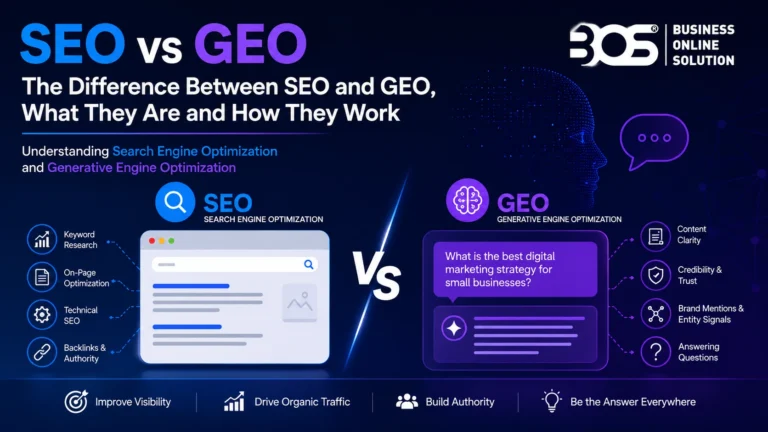
This is why Generative Engine Optimization (GEO) matters, and we explain how it differs from classic search in SEO vs GEO. Traditional SEO is still the foundation, but ask every candidate: “What is your strategy for AI search visibility?” A good answer covers technical SEO, structured content, topical authority, brand mentions and clear information about your business. Our guide on how to appear in AI results explains what that work looks like in practice.
9. Look for transparent reporting
You should always know what your agency is doing. Regular reports should cover organic traffic, keyword positions, clicks and impressions, conversions, top landing pages, backlinks, technical fixes, completed work and next priorities.
More importantly, someone should explain what the numbers mean. A report full of charts is useless if nobody can tell you whether SEO is growing your business.
10. Avoid anyone who guarantees #1 rankings
This is one of the biggest red flags. No legitimate agency controls Google’s rankings. Algorithms change, competitors improve and results differ by location, device and query.
The same goes for AI search. Nobody can honestly promise “#1 on Google in 30 days” or “guaranteed recommendation by ChatGPT”. What a good agency can do is build a data-driven plan that improves your relevance, technical quality, content and authority over time.
11. Compare value, not just price
Comparing agencies only by monthly fee is misleading. Imagine one provider charges £500 a month and another charges £1,500. The cheaper one may produce generic content, poor links and little technical work, and end up costing you more in lost months.
A better question than “which is cheapest?” is: which agency gives the best combination of expertise, strategy, execution, communication and cost?
12. If you sell to businesses, check their B2B experience
B2B SEO works differently from B2C. Sales cycles are longer, the audience is smaller and more specific, and several people are usually involved in the decision. Traffic matters less than reaching the right decision-makers.
When choosing an agency for a B2B company, ask:
- Which B2B clients have they worked with, and in which industries?
- How do they target decision-makers rather than general visitors?
- How do they measure lead quality, not just lead volume?
- Can their content explain a complex service clearly enough for a buyer to act on it?
The same logic applies to other specializations. An online store needs ecommerce experience, which we cover in how to evaluate an ecommerce SEO agency, and a local business needs someone who understands local SEO.
13. Do you need an agency in your own country?
Not necessarily. A UK company does not need a UK-based agency, and the same is true for businesses in the US, Canada, Germany or Switzerland. SEO is a digital service. What matters is whether the team understands your market, language, customers, competitors and search behavior.
Agency costs in the UK, US and Canada are high, and many small and mid-sized businesses find those fees hard to justify. Experienced agencies in lower-cost European markets can be a strong alternative, as long as you hold them to the same standards: qualified specialists, professional tools, transparent reporting, clear communication and a measurable strategy.
A European option: BOS.al
One example is BOS.al, a digital marketing agency based in Tirana, Albania. It works with businesses that want professional SEO without the overhead of agencies in London or New York. Services cover SEO, GEO, web development, content and paid advertising, with monthly SEO typically ranging from €400 to €600 depending on scope.
Albania shares the CET time zone with most of the EU and is a short flight from the UK, which makes regular calls and collaboration easy. Whichever agency you choose, the test stays the same: expertise, strategy, communication, transparency and understanding of your business.
14. Ask these questions before you hire
The simplest test of how to choose an SEO agency is the first call. Before signing a contract, ask:
- How will you decide which keywords we should target?
- How will you analyze our competitors?
- What technical SEO work will you do?
- How do you plan and create content?
- How do you earn backlinks?
- How will you measure conversions?
- How often will we get reports, and who explains them?
- Who will actually work on our account?
- How are you adapting your work for AI search?
- What should we realistically expect in the first 3–6 months?
The quality of the answers will tell you more than any sales presentation.
How long should you work with an SEO agency?
SEO is a long-term growth channel, not a short campaign. Some wins come quickly, especially when a site has obvious technical issues. Competitive growth usually takes longer, depending on your site’s authority, competition, target keywords, existing content and backlinks.
Be skeptical of fixed, guaranteed timelines. A good agency sets realistic expectations only after analyzing your site and your competitors.
Key takeaways
- Buy a strategy tied to your business goals, not a fixed SEO package.
- Technical SEO, keyword intent and content quality matter as much as links.
- Good reporting explains what the numbers mean for your business.
- Guaranteed rankings, “500 backlinks a month” and vague deliverables are red flags.
- B2B, ecommerce and local businesses need an agency with matching experience.
- Location matters less than market knowledge; lower-cost European agencies can offer the same standards.
- Learning how to choose an SEO agency is really about choosing a long-term growth partner. If SEO is only one part of what you need, see how to choose a marketing agency.
Frequently asked questions
Is it worth hiring an SEO agency?
It is worth it when organic search is an important way for customers to find you and you do not have the skills or time to do SEO in-house.
How much does an SEO agency cost?
It depends on your market, website size, competition and scope. Agencies in the UK, US and Canada usually charge more because of higher operating costs. As a reference, BOS.al’s monthly SEO typically costs €400 to €600.
Can an SEO agency get my business into AI results?
It can strengthen the technical, content, authority and brand signals that AI tools rely on. No legitimate agency can guarantee that a specific AI platform will mention your business.