
TL;DR: AI tools like Google AI Mode and ChatGPT build their answers from pages they can find, understand and trust. To be cited, you need solid SEO first, then content that answers real questions, a consistent brand across the web and credible mentions. Nobody can guarantee a place in AI answers, but these 8 steps improve your chances.
Customers no longer find businesses only through the classic list of Google links. More and more of them ask questions directly in ChatGPT, Google AI Overviews and AI Mode, Microsoft Copilot or Perplexity, and get one written answer instead of ten links.
So the question for most businesses is simple: how to appear in AI search results when a potential customer asks about your service? This guide explains what it means, the 8 steps that help, what it costs and what to watch out for.
What does it mean to appear in AI search results?
It means your company, website or content is cited, referenced or recommended inside an AI-generated answer.
Classic search shows a list of pages. AI search reads several sources and writes a direct answer. Instead of typing “SEO agency for international businesses”, a customer might ask: “Which experienced SEO agencies in Europe work with UK companies?” Your goal is no longer only to rank a page, but to be a source the AI understands and trusts enough to mention.
For how this works inside Google specifically, see our guide to Google AI Mode.
SEO and GEO: why you need both
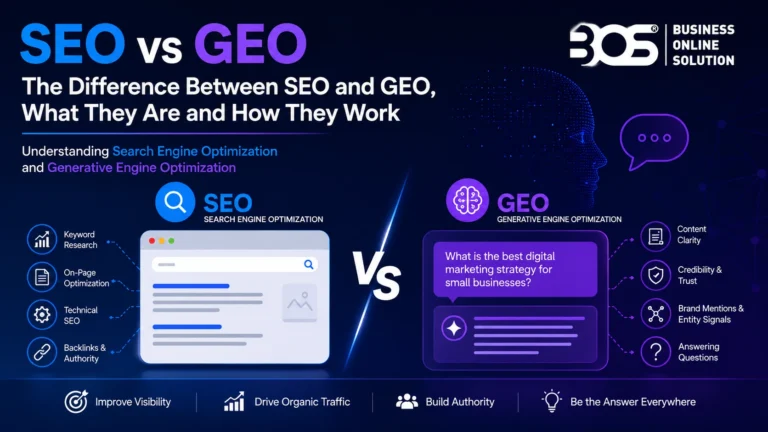
SEO improves your visibility in classic search results. GEO (Generative Engine Optimization) makes your business easier for AI tools to understand, trust and cite. Most of the work overlaps, which is why the steps below cover both. For the full comparison, see SEO vs GEO.
How to appear in AI search results: 8 steps
Start by choosing the topics that matter commercially. “Ranking on AI” is not a goal; being cited for “SEO agency in Europe” or “car rental without deposit in Albania” is.
1. Research keywords and the questions behind them
Keyword research still comes first, but it now has to include conversational questions. Search Console is a good place to start: longer, question-style queries already showing for your pages tell you how people phrase their problems. A classic search might be “car rental Tirana airport”. The AI version might be “Which car rental at Tirana airport has no deposit and free cancellation?” Both show the same buying intent, so your content should cover the keyword and the questions around it.
2. Build topical authority
One article is rarely enough. If you want AI tools to see you as an expert, cover the topics around your service in depth and link those pages together. For an SEO agency, that means connected pages on technical SEO, local SEO, structured data, Search Console and AI visibility, not unrelated blog posts.
3. Answer questions directly
AI tools favor pages that answer a question clearly near the top. Use headings that match real questions, give the answer first in one or two sentences, then the detail, examples and numbers. Pages that bury the answer under a long introduction are much harder for an AI tool to quote. A short summary at the start of a post, like the TL;DR above, is one of the easiest ways to make a page quotable.
4. Strengthen your brand across the web
Your website should not be the only place your business exists. Business profiles, reviews, directories, partner sites, media mentions and industry websites all help establish that your company is real and recognized. This is where SEO, digital PR and GEO overlap most.
5. Fix your technical SEO
Great content cannot make up for a site that search engines struggle to crawl. Check indexing, mobile usability, speed and Core Web Vitals, HTTPS, canonical tags, redirects, XML sitemaps and internal links. If you are new to this, start with what SEO is and its three pillars.
6. Use structured data
Schema markup describes your organization, services, articles and people in a format machines read easily. It does not guarantee you will appear in AI answers, but it removes guesswork about who you are and what you offer.
7. Earn authority, mentions and quality links
A business mentioned by credible websites has a stronger footprint than one that only exists on its own site. Focus on relevant mentions from publications, partners, associations and quality directories. Hundreds of cheap links will not help and can hurt.
8. Keep business information consistent
Your name, services, location and contact details should match everywhere: your website, Google Business Profile, directories and social profiles. Strong About, Services, Contact and case study pages make it easy for both people and AI tools to understand who you are.
How to check if you appear in AI answers
You can’t improve what you don’t measure. Four simple checks:
- Test the questions yourself. Write down 10–20 questions a customer would ask about your service, ask them in ChatGPT, Perplexity, Copilot and Google AI Mode, and note whether your business or site is mentioned. Repeat monthly, because answers change.
- Check AI referrals in Google Analytics 4. Look at traffic sources for chatgpt.com, perplexity.ai, copilot.microsoft.com and gemini.google.com. Even a few visits show which pages AI tools send people to.
- Watch Google Search Console. AI Overviews and AI Mode visibility is counted in the normal Performance report. Longer, question-style queries appearing for a page are a good sign it is being used for AI answers. For Google specifically, see how to monitor performance in AI Mode.
- Look at who is cited instead of you. When a competitor is mentioned and you are not, open the cited page and compare: does it answer the question more directly, have more reviews, or appear on more third-party sites?
These checks turn a vague goal into a list of specific pages and signals to improve.
Can anyone guarantee you will appear in AI results?
No. AI answers change by question, location, platform and the sources available at that moment. No legitimate agency can promise a place in ChatGPT, Google AI Mode or Perplexity.
What a good strategy can do is make your business more discoverable, understandable, relevant and trustworthy over time. That raises your chances of being cited in both classic and AI search. It is also why ChatGPT won’t replace SEO: the same foundations drive both.
How long does it take?
There is no fixed timeline for how to appear in AI search results. It depends on your site’s current authority, competition, technical condition and content. As a rough guide, technical fixes and clear answers can show effects within weeks, while authority and brand signals in competitive markets take months. Treat it as an ongoing cycle: research, optimize, publish, build authority, measure, improve.
What does SEO and GEO support cost?
Ongoing SEO in the UK, US and Canada typically costs $500–$2,000 a month, and more once content and link building are added. That is more than many small and mid-sized businesses can justify. Choosing the cheapest provider instead usually means thin content and poor links.
A middle option is an experienced agency in a lower-cost European market. At BOS.al in Tirana, monthly SEO packages are €400–€600, covering both classic SEO and AI search visibility. Whoever you consider, judge them on method, transparency and results, not location. Our guide on how to choose the right SEO agency covers the questions to ask. Be cautious with anyone promising “guaranteed ChatGPT recommendations” or “instant GEO results”. Those promises misunderstand how AI search works.
Key takeaways
- AI tools cite pages they can find, understand and trust, so SEO remains the foundation.
- Target the questions customers ask, not only short keywords.
- Answer clearly near the top of each page and use headings that match real questions.
- Build authority beyond your website: reviews, profiles, mentions and quality links.
- Keep business details consistent everywhere.
- Nobody can guarantee a place in AI answers; judge agencies on method and transparency.
Frequently asked questions
Can I pay to appear in AI results?
Not organically. Paying an agency means paying for work that improves your visibility, not paying an AI platform to recommend you. Some platforms show ads next to AI answers, but those are labeled as sponsored and are separate from organic citations.
Which AI tools should I focus on first?
For most businesses, Google first, because AI Overviews and AI Mode sit on top of the searches your customers already make. Then make sure your site is set up in Bing Webmaster Tools, since Bing powers Copilot and is one of the sources behind ChatGPT search.